
Blog
How Is Red Tongkat Ali Root Processed?
The cleaning, slicing, and drying sequence for our Red Tongkat Ali root slices, what's still not publicly documented, and why we don't invent supply-chain details.
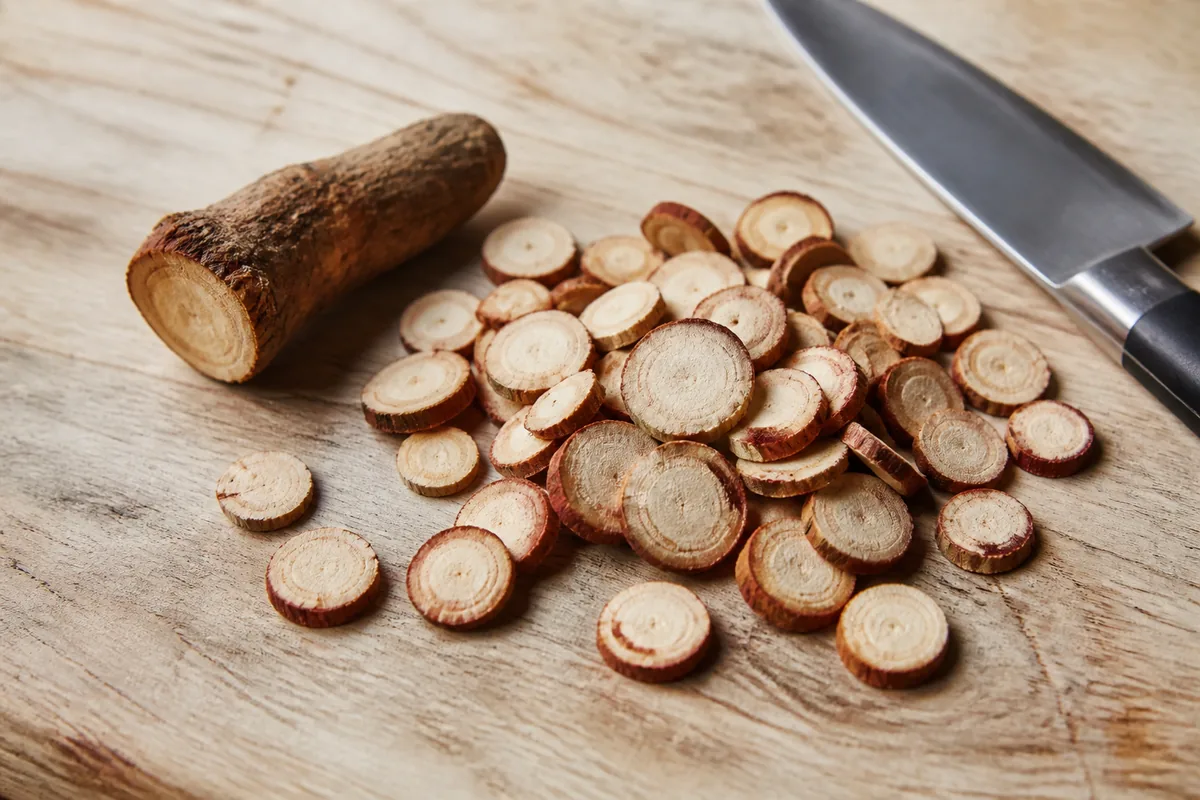
How is Red Tongkat Ali root processed? The root is cleaned first, then briefly shade-dried to remove surface moisture, and sliced immediately afterward. Once sliced, the main drying takes place: about 1 hour of sun exposure, followed by about 4 hours of shade drying. Sourced with a Pahang, Malaysia story and offered in 500g, 1kg, and 2kg packs. Slice thickness standards, harvest-crew details, farm standard operating procedures, and batch-specific testing remain undocumented — we won't fill those gaps with a "traditional" or "hand-selected" story.
What Is Publicly Stated
We sell dried root slices intended to be brewed as tea. The process sequence is: roots are cleaned, briefly shade-dried to remove surface moisture, and sliced right after; the main drying happens once slicing is complete — about 1 hour of sun exposure, followed by about 4 hours of shade drying. Sourced with a Pahang, Malaysia claim, offered in 500g, 1kg, and 2kg packs (current availability and pricing are on the shop page). Vacuum packaging is mentioned elsewhere on our site — that describes packaging context, but it doesn’t document every upstream handling step or establish shelf-life, sterility, identity, or constituent level.
What Isn’t Currently Publicly Documented
The following are not currently documented for our product batches: cutting equipment or slice-thickness standards; harvest crew or the specific harvest location; farm or supplier standard operating procedures; storage conditions between drying and packaging; and batch-specific microbial, pesticide, or constituent testing.
That absence doesn’t authorize us to fill the remaining gaps with a generic “forest-to-cup” story — those would be claims that need records we don’t have.
What Processing Can and Can’t Establish
Cleaning and drying make root material practical to brew and more stable to store. They don’t by themselves establish botanical identity, a standardized dose, purity, or clinical effect. We don’t publish a batch COA, DNA identification, or contaminant screening — see What We Test. Human Tongkat Ali literature predominantly concerns defined extracts, not our dried root-slice tea, so a study of an extract can’t verify whether this batch’s processing meets any particular potency standard. See Root slices vs. extract.
A Transparent Buyer Checklist
If processing information matters to your decision, ask any seller for: a batch number and packaging date, the exact cleaning/cutting/drying/storage method, the name and scope of any lab report, documentation linking that report to the batch offered for sale, and a clear distinction between product facts and traditional or research background. If the information isn’t available, treat it as unknown rather than assuming best practices were followed.
Related Reading
What Is Red Tongkat Ali? · What We Test · Evidence Index · Root slices vs. extract · How to Brew Tongkat Ali · US Import & Compliance
Educational information, not medical advice. This product has not been evaluated by the FDA and is not intended to diagnose, treat, cure, or prevent any disease.
Frequently asked questions
Are the roots washed before slicing?
Are the slices sun-dried or shade-dried?
Does vacuum packaging mean the product is lab tested?
Does processing make the slices equivalent to a research extract?
How long does shipping from Malaysia to the USA take?
Where can I buy Red Tongkat Ali root slices in the USA?
Ready to brew the real root?
500g, 1kg or 2kg of Malaysian Red Tongkat Ali root slices — tracked shipping to the USA included. Pay by card or USDT (5% off).
Shop root slicesLost or damaged? Free reship · Secure Stripe checkout · One-time purchase, no subscription