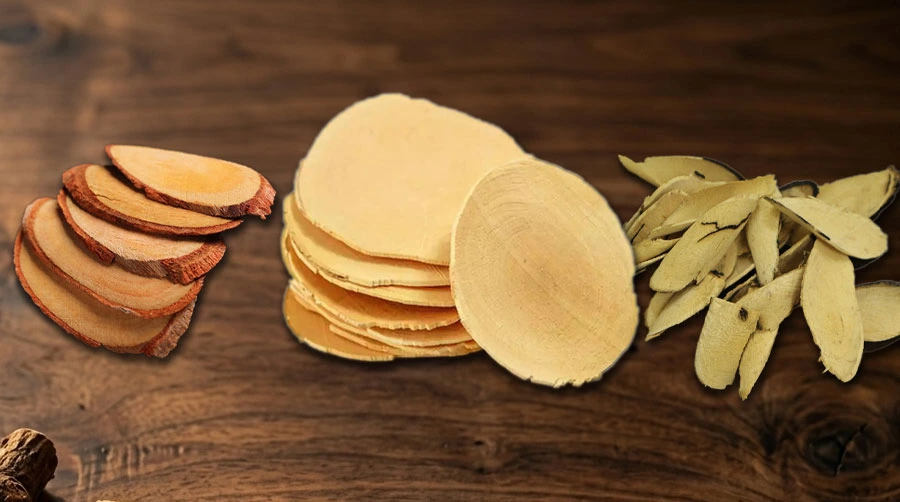
If you’ve searched for Tongkat Ali online, you’ve almost certainly seen three varieties listed: Red, Yellow, and Black. Most sellers use these names freely — but few bother to explain what they actually mean.
The result? Widespread confusion, mislabeled products, and buyers paying premium prices for the wrong thing entirely.
This guide gives you the complete, science-grounded picture — so you can make an informed decision.
The Most Important Thing to Understand First
Red, Yellow, and Black Tongkat Ali are three botanically distinct plant species. They are not color grades, quality tiers, or processing variants of the same root.
This distinction is frequently glossed over by sellers who either don’t understand it or prefer you don’t. It matters significantly:
| Common Name | Scientific Name | Primary Origin | Traditional Application |
|---|---|---|---|
| Yellow Tongkat Ali | Eurycoma longifolia | Malaysia, Indonesia, Thailand, Vietnam | Male vitality, testosterone support, energy |
| Red Tongkat Ali | Jackiopsis ornata | Malaysian highlands, Pahang | Male and female vitality; considered most potent |
| Black Tongkat Ali | Polyalthia bullata | Borneo (Sabah, Sarawak) | Fever, malaria, digestive complaints |
Each variety has a distinct botanical identity, a distinct growing region, and a distinct set of traditional applications. Treating them as interchangeable is simply incorrect.
Yellow Tongkat Ali: The Most Researched
Yellow Tongkat Ali (Eurycoma longifolia) is the variety behind virtually all published clinical research on Tongkat Ali. It has a pale cream to yellowish interior and is commercially cultivated across Malaysia and Indonesia at significant scale.
What the research shows:
Multiple peer-reviewed studies have examined Yellow Tongkat Ali’s effects on testosterone levels, stress hormones, and physical performance. A 2013 study published in the Journal of the International Society of Sports Nutrition found that supplementation with E. longifolia extract was associated with improvements in testosterone levels and stress hormone profiles in moderately stressed adults.
Profile at a glance:
- Most widely available variety — the standard in global supplement markets
- Most studied — nearly all published clinical research uses this species
- Available as raw root and standardized extract powder (typically 1:200 or 1:400 ratio)
- Broad quality range — from genuinely wild-harvested highland roots to farmed 3-year plantation stock
The quality gap you need to know about:
Because Yellow Tongkat Ali is commercially cultivated, the quality range is enormous. A farmed 3-year-old plantation root is a fundamentally different product from a wild 15-year-old highland root — yet both are marketed under the same name. Age and growing environment directly affect bioactive compound concentration.
When shopping for Yellow Tongkat Ali, always ask: Is this wild-harvested or farmed? How old is the root at harvest?
Black Tongkat Ali: Rare but Frequently Misrepresented
Black Tongkat Ali (Polyalthia bullata) grows primarily in the lowland and hill forests of Borneo — Sabah and Sarawak in Malaysian Borneo, and Kalimantan in Indonesia. It is the rarest of the three varieties and the least studied.
Traditional uses:
In Bornean traditional medicine, Black Tongkat Ali has been used primarily for fever reduction, malaria treatment, and digestive complaints. These are meaningfully different applications from the vitality and testosterone support associated with Yellow and Red.
The marketing problem:
A growing number of sellers market Black Tongkat Ali for male hormonal support — which is not its traditional application and is not supported by the available research literature. If you’re seeking energy, testosterone support, or physical performance benefits, Black Tongkat Ali is not the variety to choose based on current evidence.
Profile at a glance:
- Rarest variety; very limited availability outside Borneo
- Minimal modern scientific research
- Traditional use focused on fever and digestion, not vitality or hormonal health
- Frequently mislabeled or misrepresented in online markets
Red Tongkat Ali: The Most Prized
Red Tongkat Ali is distinguished by its visibly reddish-brown bark — clearly visible on the outer edge of each root slice. The interior wood ranges from pale cream to amber, similar to Yellow Tongkat Ali, but the bark color is the reliable distinguishing feature.
In Malaysian traditional herbal medicine (perubatan tradisional Melayu), Red Tongkat Ali has historically been considered the most potent tonic variety — not the most common, but the most powerful.
Why Practitioners Consider Red Superior
1. Growing environment
Red Tongkat Ali grows in the highland rainforests of Peninsular Malaysia — typically above 500 metres altitude, in cooler, wetter, denser forest where fewer collectors venture. This environment creates different chemical stress responses in the plant compared to lowland growth, which is thought to contribute to higher bioactive compound concentrations.
2. Exceptional growth rate
Wild highland roots grow extremely slowly. A root of harvestable size may represent 15 to 25 years of growth. This slow maturation concentrates bioactive compounds — particularly eurycomanone and other quassinoids — to levels that simply cannot be replicated in commercially farmed alternatives with 3–5 year growth cycles.
3. Bitterness as a potency indicator
Traditional practitioners across Malaysia consistently rate Red as more bitter than Yellow — and in traditional botanical medicine, bitterness correlates with bioactive compound concentration. The quassinoids and glycosaponins responsible for Tongkat Ali’s effects are the same compounds responsible for its characteristic bitterness. A more intensely bitter root reflects higher compound density.
4. Traditional prestige and specific use cases
In Malaysian kampung (village) medicine, Red Tongkat Ali was reserved for cases requiring the strongest tonic effect — significant fatigue recovery, older individuals needing robust support, and both male and female vitality concerns. Yellow was the everyday option; Red was prescribed for those who needed more.
How to Verify You’re Getting Genuine Red Tongkat Ali
Because Red Tongkat Ali commands a premium price, it is more frequently misrepresented. Some sellers simply label Yellow root as Red. Here’s a practical verification checklist:
Visual Inspection
- Bark color: Should be noticeably reddish-brown to dark reddish — distinctly different from the pale yellow or neutral brown of Yellow variety
- Annual growth rings: Clearly visible in the root cross-section — a reliable indicator of slow wild growth over many years
- Wood density: Dense, hard texture — not soft, spongy, or crumbly
Brew a Test Cup
- Use one root slice in 200ml of water, simmer for 15 minutes
- The tea should be intensely bitter — more so than strong black coffee
- Color should be dark amber to reddish-amber — noticeably deeper than Yellow variety tea
- If the tea is pale and only mildly bitter, you likely have Yellow variety being sold under the Red name
Ask Your Seller Directly
A legitimate seller of Red Tongkat Ali should be able to answer:
- Which region was it harvested from? (Should be highland Peninsular Malaysia — not Borneo, not lowland Indonesia)
- Is it wild-harvested or farmed? (Genuine Red is wild-harvested — farmed Red does not yet exist at meaningful commercial scale)
- What is the basis for calling it “Red”? (Should be bark color — not a marketing decision)
If a seller cannot answer these questions clearly, treat the product with skepticism.
Comparison Summary: Which Variety Is Right for You?
| Your Goal | Best Choice |
|---|---|
| Maximum traditional potency | Wild-harvested Red Tongkat Ali from highland Malaysia |
| Most clinical research support | Yellow Tongkat Ali — wild-harvested, not farmed |
| Better value with good availability | Wild-harvested Yellow (more accessible, lower cost than Red) |
| Fever or digestive traditional use | Black Tongkat Ali (very niche; not for vitality) |
If you are specifically seeking the most potent, most traditionally prestigious Malaysian vitality root — and you want to buy from the region where this plant has been used for generations — Red Tongkat Ali from the highlands of Pahang is the clear choice.
Frequently Asked Questions
Is red tongkat ali better than yellow tongkat ali?
For traditional potency, yes — Red is consistently rated above Yellow by Malaysian traditional practitioners. Red grows more slowly in highland environments, producing higher bioactive compound concentrations. That said, high-quality wild Yellow Tongkat Ali is still a genuinely effective product and may be more accessible.
Can women take tongkat ali?
Red Tongkat Ali in particular has a history of traditional use for female vitality in Malaysia — it is not exclusively a male supplement. That said, women who are pregnant, breastfeeding, or have hormone-sensitive conditions should consult a healthcare provider before use.
What does tongkat ali taste like?
Genuinely potent Tongkat Ali — especially Red variety — is intensely bitter. This bitterness is not a defect; it reflects the presence of bioactive quassinoid compounds. If your Tongkat Ali tastes mild or neutral, it likely has low potency.
Is tongkat ali safe?
Yellow Tongkat Ali (E. longifolia) has a reasonable safety profile in the available research literature at standard doses. It is not recommended for individuals with hormone-sensitive conditions, those on blood pressure medication, or those with kidney or liver conditions without medical clearance. Red Tongkat Ali lacks the same depth of clinical research but has a long history of traditional use in Malaysia.
What We Sell
We stock exclusively wild-harvested Red Tongkat Ali from the highland rainforests of Pahang, Malaysia. We do not carry Yellow or Black varieties, and we do not blend varieties.
Every batch we supply carries the visibly reddish bark, intense bitter taste profile, and visible annual ring structure that characterize genuine wild highland Red Tongkat Ali. We source personally from collectors we know — there is no opaque supply chain between forest and customer.
How to brew and use Tongkat Ali → | Safety and side effects →
Wild Red Tongkat Ali — 500g (USD $59.90) · 1kg (USD $119.90)
Order or enquire via WhatsApp →
Disclaimer: This article is for educational purposes only and does not constitute medical advice. Consult your healthcare provider before starting any new supplement, particularly if you have existing health conditions or take prescription medications.