Origin June 1, 2025 · 7 min read

Where Does Tongkat Ali Come From? Why Malaysian Origin Matters

Not all Tongkat Ali is created equal. Learn why wild-harvested Malaysian Tongkat Ali from the Pahang highlands outperforms farmed and Indonesian-sourced alternatives — and what to look for before you buy.

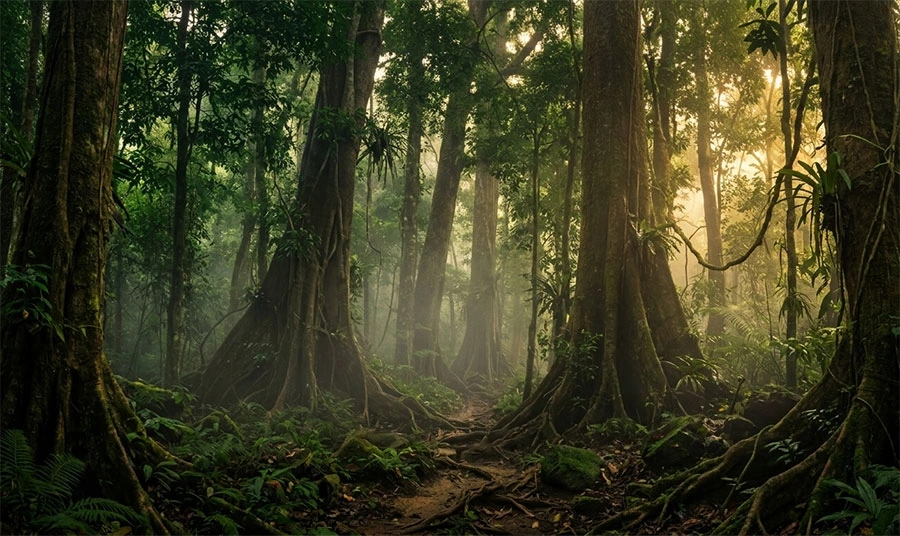
Ancient highland rainforest of Pahang, Malaysia — where wild Tongkat Ali roots grow undisturbed for decades

Every Tongkat Ali supplement sold in the United States, United Kingdom, Canada, or Australia began its journey somewhere — a specific country, a specific growing environment, a specific root.

That origin matters far more than most buyers realise. Two products labelled “Tongkat Ali” can have dramatically different potency and effectiveness depending on where the root came from, how old it was at harvest, and whether it grew wild in ancient forest or in a commercial plantation.

This article explains exactly why origin determines quality — and why the Pahang highlands of Malaysia consistently produce the most potent root available anywhere in the world.


The Natural Range of Tongkat Ali

Eurycoma longifolia — the scientific name for Tongkat Ali — grows naturally across a band of tropical Southeast Asia: peninsular Malaysia, Sumatra and Borneo (Indonesia), Thailand, Vietnam, Laos, and parts of the Philippines.

Of all these regions, Malaysia holds a special significance. Malaysian Tongkat Ali has the longest documented history of medicinal use, the deepest traditional knowledge base among indigenous communities, and — critically — still maintains significant populations of genuinely wild, mature roots in its protected highland forests.


Why Malaysia Produces Superior Tongkat Ali

The Age of the Forests

Peninsular Malaysia is home to some of the oldest rainforest on Earth — estimated to be over 130 million years old, predating even the Amazon by tens of millions of years. The Titiwangsa mountain range running up the spine of the peninsula, and the vast highland forests of Pahang, Kelantan, and Terengganu, represent an unbroken ecological continuity that most of the world’s forests lost long ago.

In this ancient, complex ecosystem, Tongkat Ali trees have grown, competed, adapted, and accumulated bioactive compounds over millennia. The roots that develop here — slowly, under challenging highland conditions — are categorically different in composition from roots grown in 3-to-5 year commercial plantation cycles.

The Highland Advantage

Within Malaysia, the most potent Tongkat Ali does not come from lowland areas near roads and towns. It grows in highland rainforest at elevations above 500 metres, where:

  • Lower temperatures slow growth, forcing the root to concentrate its bioactive compounds over a longer period
  • Higher rainfall and humidity produce denser, more biodiverse forest with richer soil microbiology
  • Older, deeper soils with accumulated organic matter provide a fundamentally different growing medium than cleared plantation land
  • Minimal human disturbance means roots grow undisturbed for decades, building compound concentration year after year

The Pahang highlands — including the Taman Negara region and surrounding protected forest reserves — remain one of the last places in Malaysia where genuinely wild, mature Tongkat Ali can still be sustainably collected by experienced harvesters who have spent their lives in these forests.


Wild vs. Farmed Tongkat Ali: The Quality Divide

As international demand for Tongkat Ali grew through the 2000s and 2010s, large-scale cultivation spread rapidly — primarily in Indonesian Kalimantan and Sumatra, and in Malaysian lowland areas.

Understanding the difference between wild and farmed root is arguably the single most important factor when evaluating any Tongkat Ali product.

Farmed Tongkat Ali

  • Harvested at 3–5 years old (commercially viable timeline)
  • Grown on cleared, managed plantation land — not in native forest
  • Typically the Yellow variety
  • Lower bioactive compound concentration due to young age, simplified soil ecology, and absence of environmental stress factors
  • Cheaper to produce at scale; dominates the supplement capsule market worldwide

Wild Tongkat Ali

  • Grows 15–25+ years before harvest — full natural maturation
  • Never been cultivated; grows in its original forest environment
  • Builds up compounds slowly in direct response to environmental stressors
  • Intensely bitter — bitterness is a reliable sensory indicator of high compound concentration
  • Increasingly rare; requires experienced collectors with deep knowledge of the forest

The difference in bioactive compound concentration between a 5-year farmed root and a 20-year wild root is not marginal. It is substantial — and it is why the cheapest Tongkat Ali products on the market, typically farmed, young, Indonesian or lowland Malaysian origin, often produce little noticeable effect even at high doses.

What this means for buyers: If a product doesn’t specify wild vs. farmed and highland vs. lowland origin, assume it is farmed lowland root — the cheapest and most widely available form.


Traditional Knowledge: The Orang Asli

The indigenous Orang Asli people of peninsular Malaysia — 18 distinct ethnic groups who have lived in these forests for tens of thousands of years — developed the most sophisticated traditional knowledge of Tongkat Ali that exists anywhere in the world.

For Orang Asli communities, Tongkat Ali was not a supplement trend. It was integrated into daily life across generations:

  • Older men brewed the root daily as a vitality and endurance tonic
  • Hunters and forest workers used it for sustained physical performance over long expeditions
  • Healers prescribed it for fatigue, post-illness recovery, and general vitality maintenance
  • The identification of the Red variety as superior to Yellow was part of their accumulated botanical knowledge — passed down orally over generations, tested by continuous daily use

This traditional knowledge base — refined over centuries of unbroken practice — is what modern scientific research is now, in significant part, beginning to validate.


The Name Tells the Story

Tongkat Ali — literally “Ali’s walking stick” in Malay — is not a botanical Latin name. It is a folk name, given by the people who knew this root longest and understood it most deeply.

The “walking stick” imagery is deliberate. It reflects a cultural understanding that runs deeper than modern supplement marketing: this is the root that keeps older men walking tall, physically capable, and vital into later life. It is a root for longevity and sustained vitality — not quick results, but enduring strength built over consistent use across months and years.

That understanding is embedded in how the root was always used: as a daily tea, brewed and consumed consistently — not taken occasionally when needed.


Why “Malaysian Origin” on a Label Is Not Enough

When a supplement states “Malaysian Tongkat Ali,” this means the root was grown in Malaysia. But that label alone tells you almost nothing about quality. It does not tell you:

  • Wild or farmed? Both categories are produced in Malaysia.
  • Highland or lowland? The potency difference is dramatic.
  • Root age at harvest? 3 years versus 20 years is an enormous difference.
  • Red, Yellow, or Black variety? All three grow in Malaysia; they have different profiles.
  • Adulteration? Has the extract been diluted with cheap starches or fillers?

This is exactly why selling the raw root directly — rather than an extract capsule with opaque supply chains — answers every one of these questions visibly, tangibly, and by taste.


Our Sourcing: Pahang Highlands, Direct

Our Red Tongkat Ali roots are sourced through long-standing relationships with experienced harvesters working in the highland rainforests of Pahang, Malaysia — the same forests where traditional harvesting has been practised for generations.

We work exclusively with collectors who:

  • Harvest only mature wild roots — never farmed or plantation-grown
  • Have deep knowledge of which highland regions consistently produce the best Red variety
  • Practise sustainable harvesting — leaving younger roots to continue growing and replenishing forest populations
  • Have decades of experience accurately identifying genuine highland Red variety in the field

From harvest to your door: roots are cleaned, sliced, dried, vacuum-sealed, and dispatched from Pahang within days. No warehouse. No extended storage chain. No supply chain opacity.

When you brew a cup, you are connected — directly — to one of the oldest living forests on Earth.


Frequently Asked Questions

Is Malaysian Tongkat Ali better than Indonesian? Malaysian highland wild root — particularly from Pahang — is generally considered superior due to older forest ecosystems, more stringent sustainable harvesting practices, and longer traditional use history. Most Indonesian Tongkat Ali on the market is farmed in Kalimantan or Sumatra and harvested at 3–5 years.

How can I tell if Tongkat Ali is genuinely wild? The most reliable indicators are: intense bitterness when brewed (farmed root is noticeably milder), supplier transparency about specific harvest region and root age, and price — genuine wild highland root cannot be sold cheaply without corners being cut.

What is the difference between Red, Yellow, and Black Tongkat Ali? These are distinct varieties with different traditional uses and compound profiles. Read our full comparison of Red vs Yellow vs Black →

How do I use Tongkat Ali root? Traditional preparation is as a decoction (slow-brewed tea). See our brewing guide →


Wild Red Tongkat Ali — Direct from Pahang, Malaysia

500g — $59.90 · 1kg — $119.90 (USD, free shipping on orders over $80)

Order now — ships worldwide →


⚠ Disclaimer: This article is for educational and informational purposes only. It does not constitute medical advice and is not intended to diagnose, treat, cure, or prevent any condition. Consult a qualified healthcare provider before adding any supplement to your routine.

Topics: tongkat ali malaysiawild tongkat ali originpahang rainforesttongkat ali wild harvestedbuy tongkat ali from malaysia directeurycoma longifolia
Try genuine wild Red Tongkat Ali from Malaysia

Raw root slices · Wild-harvested · Pahang, Malaysia 🇲🇾 · Ships worldwide · From $59.90