
Blog
Tongkat Ali Sleep Guide: Does It Help or Cause Insomnia?
Does Tongkat Ali help sleep or cause insomnia? What studies measured, morning vs evening timing, how to test a new tea safely, and when to see a doctor.
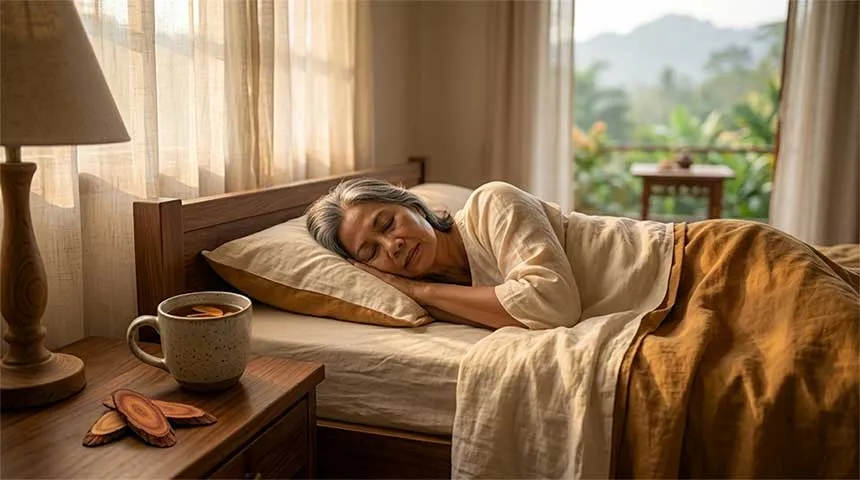
Does Tongkat Ali affect sleep? A sleep benefit, an insomnia risk, and a safe time-of-day rule haven't been established for brewed root tea. If a new tea seems to disturb your sleep, stop using it and seek professional advice if the problem persists.
There’s no good basis for promising that Tongkat Ali will improve sleep, and no product-specific evidence that every user will find it stimulating. Reports in either direction are personal observations, not a substitute for controlled research on the same preparation.
What Human Research Actually Studied
Human studies of Eurycoma longifolia have generally involved selected standardized extracts. The frequently cited 2022 systematic review concerns testosterone-related outcomes, not proof that loose root tea treats insomnia: PubMed 36013514. Claims about “balancing cortisol” are often used to bridge the gap between extract studies and sleep marketing — that bridge isn’t justified. A result involving a particular extract or lab measure doesn’t establish that brewed root slices lower cortisol or improve sleep.
The essential boundary is extract study, root tea, and this batch as three different things. Our dried slices are sold as a food for brewing — we don’t publish a batch certificate of analysis or measured eurycomanone concentration, and taste or colour can’t show the tea matches a research material. See what we test.
Why Experiences Can Differ
Sleep is affected by many variables that change day to day: caffeine and alcohol timing, stress and pain, exercise timing, prescription medicines, menopause symptoms, sleep apnoea, and expectations about whether a product will be calming or stimulating. If someone drinks root tea in the evening and sleeps badly, the timing makes the tea a reasonable suspect but doesn’t prove causation. Repeated, carefully observed patterns are more informative than one night, but they still don’t create clinical evidence.
Is Morning Better Than Evening?
There’s no clinically validated time-of-day protocol for these root slices. Morning use is sometimes suggested as a practical precaution because some people describe feeling alert after Tongkat Ali products — that’s a tolerance strategy, not proof of a stimulant mechanism. If you choose to try the tea: don’t first try it late in the day, avoid combining the trial with extra coffee or other new supplements, and don’t use it before driving until you know how it agrees with you.
How to Investigate a Possible Sleep Effect
Before introducing anything new, note bedtime, estimated sleep onset, and caffeine/alcohol use for several days. If you then introduce the tea, keep the rest of your routine stable. Stop if you notice a consistent deterioration — don’t increase the amount to test whether the response “settles.”
When Poor Sleep Needs Assessment
Don’t use Tongkat Ali to self-treat insomnia, anxiety, or unexplained fatigue. Contact a clinician when sleep difficulty is persistent, worsening, or impairing concentration or mood. Prompt assessment is particularly important with loud snoring with pauses in breathing, severe daytime sleepiness, or a major mood change.
Bottom Line
Tongkat Ali root tea is neither a proven sleep aid nor a clinically characterised stimulant. Prioritise established sleep care, stop if a new tea appears to cause problems, and review the fuller side-effects guidance before use.
Educational information, not medical advice. This product has not been evaluated by the FDA and is not intended to diagnose, treat, cure, or prevent any disease.
Frequently asked questions
Can Tongkat Ali be used for insomnia?
Does Tongkat Ali lower cortisol at night?
If it makes me alert, does that mean it's potent?
Who should not drink Tongkat Ali tea?
Where can I buy Red Tongkat Ali root slices in the USA?
Ready to brew the real root?
500g, 1kg or 2kg of Malaysian Red Tongkat Ali root slices — tracked shipping to the USA included. Pay by card or USDT (5% off).
Shop root slicesLost or damaged? Free reship · Secure Stripe checkout · One-time purchase, no subscription