
Blog
Tongkat Ali vs Ashwagandha: Differences, Evidence & Which to Choose
Tongkat Ali vs ashwagandha compared: plant, tradition, what human studies actually measured, safety flags, formats and cost — plus whether people take both.
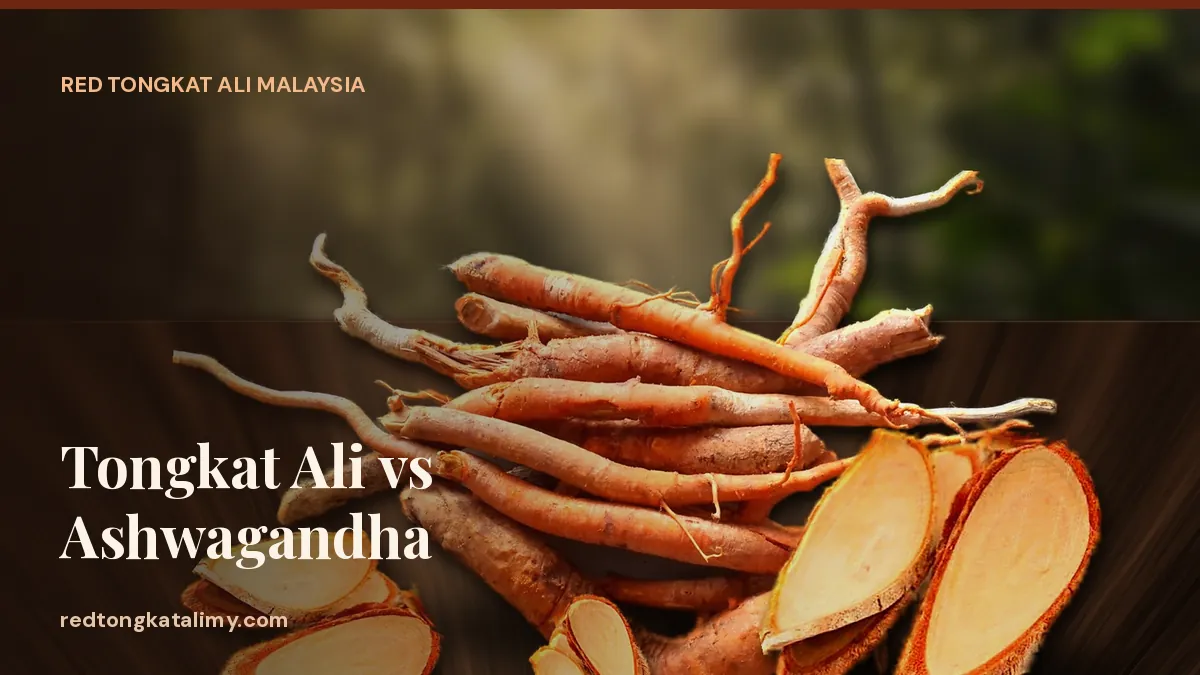
Tongkat Ali vs ashwagandha: They are two unrelated plants from different traditions. Ashwagandha (Withania somnifera, India) has mostly been studied as an extract for stress, anxiety and sleep. Tongkat Ali (Eurycoma longifolia, Southeast Asia) has mostly been studied as an extract for testosterone-related measures in men. No quality head-to-head trial shows one is "better," and neither body of research automatically applies to a brewed root tea.
At a Glance
| Tongkat Ali | Ashwagandha | |
|---|---|---|
| Plant | Eurycoma longifolia (tree root) | Withania somnifera (shrub root) |
| Tradition | Malaysia, Indonesia, Southeast Asia | India (Ayurveda) |
| Other names | Longjack, Pasak Bumi | Indian ginseng, winter cherry |
| Most-studied use (extracts) | Testosterone-related measures in men | Stress, anxiety, sleep |
| Typical trial length | Weeks to a few months | About 6–8 weeks; safety data to ~3 months |
| Traditional format | Sliced root simmered as bitter tea | Root powder, often with milk |
| Taste | Woody, bitter, slightly sweet finish | Earthy, slightly bitter |
| Key cautions | Limited long-term data; quality varies by product | Reports of liver injury; possible thyroid effects; avoid in pregnancy |
What the Research Actually Measured
Ashwagandha. The US National Institutes of Health Office of Dietary Supplements fact sheet summarises trials in which people taking ashwagandha extract for 6–8 weeks reported less stress and anxiety, and some reported falling asleep faster and sleeping longer. The same fact sheet notes that ashwagandha has been linked to liver injury in some people, may affect thyroid function, and may not be safe in pregnancy or breastfeeding.
Tongkat Ali. A 2022 systematic review of human trials (PubMed 36013514) reported possible improvement in total testosterone in men taking Eurycoma longifolia extracts, and called for more research. The US military’s Operation Supplement Safety describes the studies as small and short-term.
The boundary that matters for both: these trials used standardized extracts at measured doses. They do not establish a benefit, dose or timeline for a home-brewed root tea — including ours. See root slices vs extract.
Which Fits Which Goal?
- “I’m wound up and sleeping badly.” Ashwagandha has the more relevant human research. Persistent anxiety or insomnia deserves a proper medical assessment rather than a supplement trial.
- “I’m a man interested in the testosterone research.” Tongkat Ali is the plant those studies used — as extracts. Low-testosterone symptoms should be checked by a doctor; no herb replaces diagnosis or prescribed therapy.
- “I want a traditional daily tea ritual rather than another capsule.” That is what Tongkat Ali root slices are: a single ingredient you simmer and sip. It is a food tradition, not a treatment.
Taking Both Together
The popular “stack” has not been tested in quality human trials. If you still want to try both, start one at a time so you can tell what does what, avoid combining with other new supplements, and speak to a clinician first if you take thyroid, blood-pressure, diabetes, sedative or immune-related medicines.
Format and Cost
Ashwagandha is mainly a capsule or powder product. Tongkat Ali comes as extract capsules or as whole sliced root. With slices you can see the root, choose your own strength, and rebrew — our brewing guide shows how, and the price-per-serving page works out to roughly $0.72–$1.16 a day on a 2kg pack.
Educational information only, not medical advice. These statements have not been evaluated by the FDA. This product is not intended to diagnose, treat, cure, or prevent any disease.
Frequently asked questions
Is Tongkat Ali better than ashwagandha?
Can you take Tongkat Ali and ashwagandha together?
Which one is for stress and sleep?
Which one is associated with testosterone?
Is ashwagandha a root tea like Tongkat Ali?
Where can I buy Red Tongkat Ali root slices in the USA?
Ready to brew the real root?
500g, 1kg or 2kg of Malaysian Red Tongkat Ali root slices — tracked shipping to the USA included. Pay by card or USDT (5% off).
Shop root slicesLost or damaged? Free reship · Secure Stripe checkout · One-time purchase, no subscription