
Blog
What Does Tongkat Ali Tea Taste Like? (And How to Make It Less Bitter)
What Tongkat Ali tea tastes like — woody, bitter, with a gentle sweet finish — why Red is milder than Yellow, and seven easy ways to make the tea less bitter.
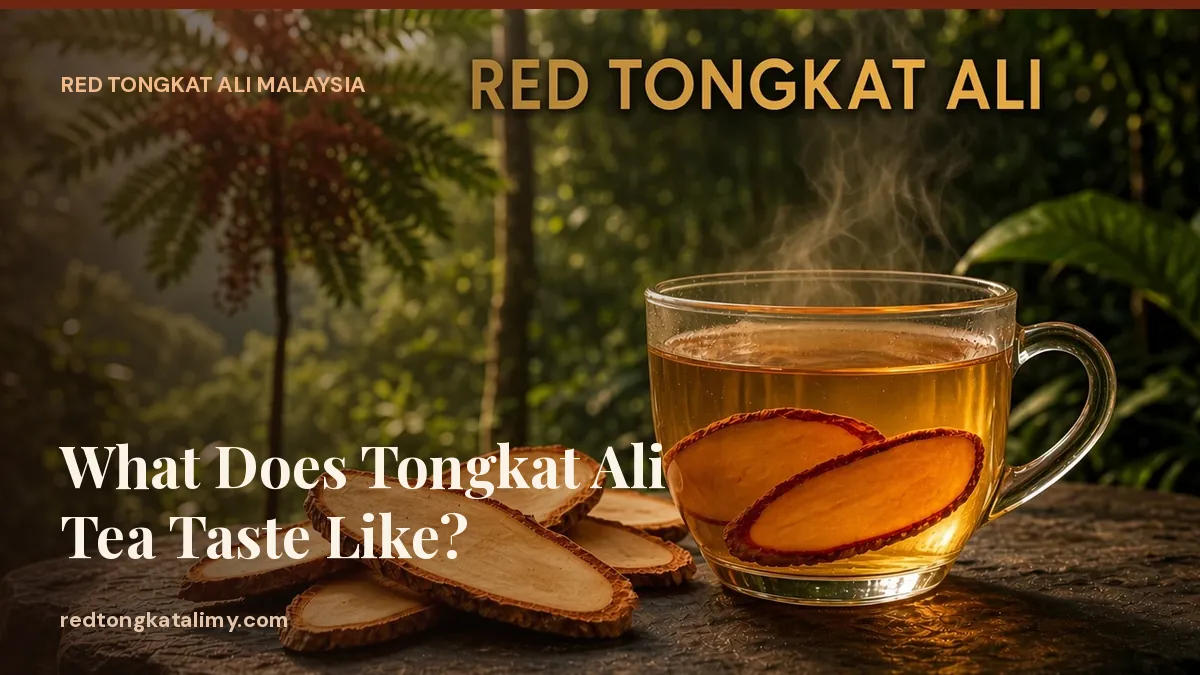
What does Tongkat Ali tea taste like? Woody, herbal and distinctly bitter, with a light ginseng-like aroma and — in milder roots such as Red Tongkat Ali — a gentle sweetness that arrives after you swallow. The colour runs from pale gold to amber. If the bitterness is too much, use fewer slices, brew for less time, or add honey, red dates or ginger.
The Flavour, Sip by Sip
| Stage | What you notice |
|---|---|
| Aroma | Light, woody and herbal, with a ginseng-like note |
| First taste | Clean bitterness — noticeable, usually not harsh in Red root |
| Aftertaste | The bitterness fades and a gentle sweetness can develop |
| Body and colour | Thin like a herbal tea; pale gold to amber depending on brew time |
Chinese-speaking tea drinkers call that returning sweetness hui gan (回甘), and many find it is what makes a bitter herbal cup pleasant rather than punishing.
Why It Is Bitter
Tongkat Ali root naturally contains bitter plant compounds called quassinoids. How bitter your cup turns out depends on the root itself, the number of slices, and above all how long you simmer. Bitterness is flavour — it is not a test of authenticity, potency or botanical identity. For what actually verifies a product, see how to identify authentic Tongkat Ali.
Red vs Yellow in the Cup
In Malaysian trade, Yellow Tongkat Ali is the common form and is often described as the more bitter one. Red Tongkat Ali — the reddish-barked root we sell — tends to suit people who prefer a milder, earthier cup. That is a taste preference, not a laboratory ranking. More in Red vs Yellow vs Black.
Seven Ways to Make It Less Bitter
- Use fewer slices. Start with one or two instead of three.
- Shorten the simmer. Fifteen minutes is noticeably gentler than thirty.
- Dilute. Top up the cup with hot water.
- Cold-soak overnight. Three or four slices in a litre of cold water in the fridge gives a softer, lighter drink.
- Add honey or rock sugar once the tea has cooled slightly.
- Simmer with red dates or a slice of fresh ginger for natural sweetness and warmth.
- Finish with lemon after straining, or drink it chilled over ice.
A Simple First Cup
Put 2 slices in 500 ml of water, bring to a boil, then simmer gently for 15 minutes. Strain, let it cool a little, stir in a teaspoon of honey and taste. Next time, adjust one thing — one more slice, or ten more minutes — until it suits you. The same slices can be simmered again while colour and flavour remain. Full methods are in the brewing guide.
Other Ways People Drink It
Some people use the strained tea as the water for their morning coffee — see Tongkat Ali coffee — and others keep a chilled bottle in the fridge. These are kitchen habits; none of them is a medical dose.
Educational information only, not medical advice. These statements have not been evaluated by the FDA. This product is not intended to diagnose, treat, cure, or prevent any disease.
Frequently asked questions
What does Tongkat Ali tea taste like?
Why is Tongkat Ali so bitter?
Is Red Tongkat Ali less bitter than Yellow?
How do you make Tongkat Ali tea less bitter?
Does a more bitter tea mean it is stronger or more genuine?
Can I add milk or honey to Tongkat Ali tea?
How do you brew Red Tongkat Ali root slices?
Ready to brew the real root?
500g, 1kg or 2kg of Malaysian Red Tongkat Ali root slices — tracked shipping to the USA included. Pay by card or USDT (5% off).
Shop root slicesLost or damaged? Free reship · Secure Stripe checkout · One-time purchase, no subscription